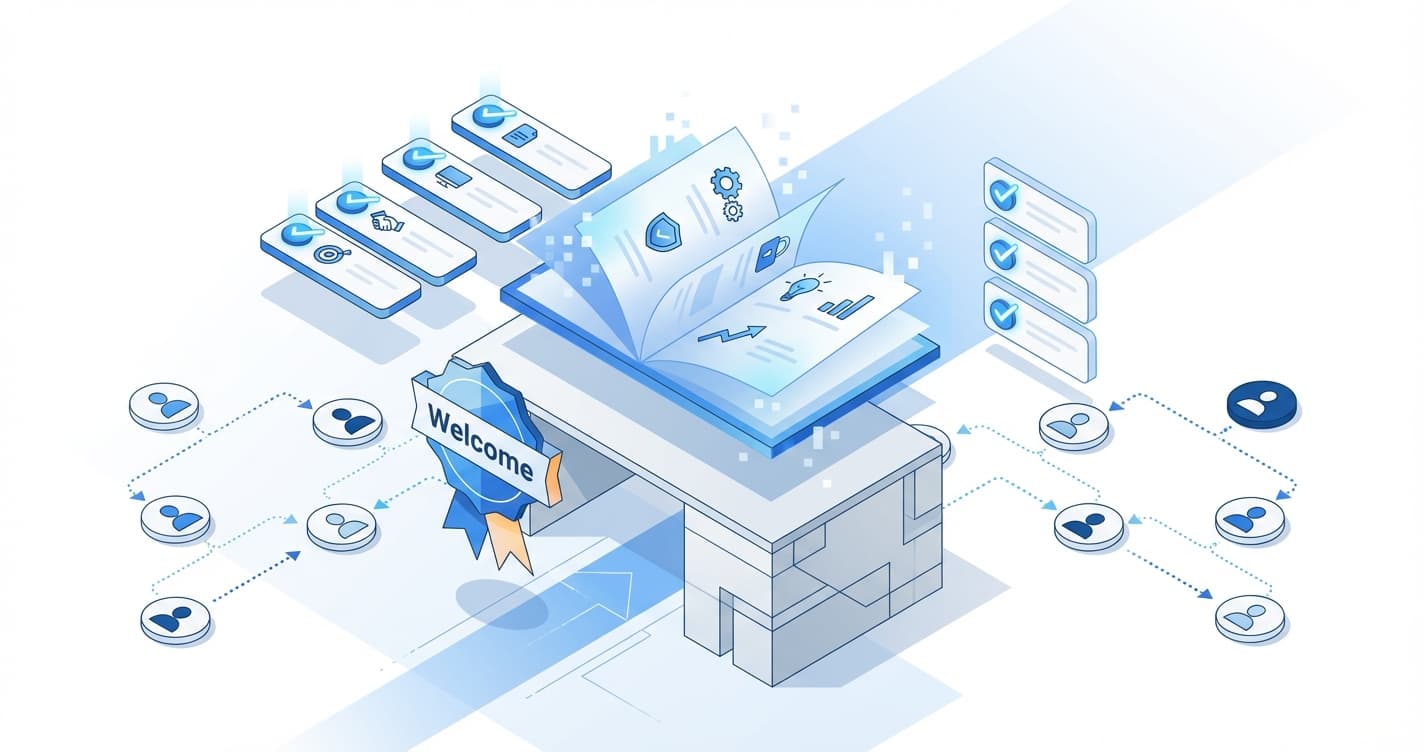
Employee Handbooks Nobody Reads? Try This Instead
HR teams are replacing static PDF handbooks with interactive flipbooks that track readership, update instantly, and actually get opened by new hires.
The Handbook Problem
Every company has an employee handbook. And every HR professional knows the truth: almost nobody reads it.
New hires sign an acknowledgment that they received it. Then the 80-page PDF goes into a folder on their laptop, never to be opened again — until there's a policy dispute and someone scrambles to find the relevant section.
This isn't a content problem. It's a delivery problem.
Why Flipbooks Work for HR
Readership Tracking
When you distribute the handbook as a flipbook link instead of a PDF attachment, you can see who actually opened it. This matters for compliance:
- Track acknowledgment with data. Instead of just a signed form saying "I received the handbook," you have analytics showing the employee accessed it, when, and which sections they reviewed.
- Identify gaps. If 90% of employees skip the data security section, that tells you where to focus your next training session.
- New hire onboarding. Track whether new hires actually review the handbook during their first week. Follow up with those who haven't.
Instant Updates
Policies change. Benefits update. Company guidelines evolve. With a printed or PDF handbook, every change means a new version, a new distribution, and a new acknowledgment cycle.
With a flipbook, you upload the updated version and the same link — the one bookmarked by every employee — now serves current content. For critical policy changes, send a brief email noting the update and linking to the specific section.
Better Engagement
An interactive flipbook with page-turn animations, a table of contents sidebar, and a clean viewer makes the handbook feel less like a legal document and more like a resource. It's a small psychological shift, but it matters when you're asking people to read 60+ pages of company policy.
Mobile Access
Employees in the field, in retail locations, or working remotely don't always have their laptop handy. A flipbook link works on any phone — they can look up the PTO policy or expense guidelines from wherever they are.
Beyond the Handbook
Benefits Guides
Open enrollment materials as flipbooks let HR track which benefits employees are researching. If the dental plan page gets 3x more views than the HSA page, that's useful data for your next benefits fair.
Onboarding Packets
New hire welcome materials, IT setup guides, and first-week checklists as a flipbook. Track completion and follow up with new hires who haven't reviewed critical materials.
Training Materials
Policy training documents, safety procedures, and compliance materials. A flipbook with analytics provides evidence that employees accessed the material — complementing your LMS for document-based training.
Company Newsletters
Internal newsletters and company updates as flipbooks. Track which stories employees care about and adjust your internal communications strategy.
Culture Decks
Company culture, values, and mission documents shared with candidates during the hiring process. Track which candidates actually review your culture materials before an interview.
Implementation
The workflow is minimal:
- Take your existing handbook PDF — no reformatting needed
- Upload to Bounder — 60 seconds of processing
- Share the link with all employees via email, Slack, or your intranet
- Bookmark it — add the link to your company wiki, onboarding checklist, and HR portal
- Monitor readership — check analytics quarterly or during policy updates
When the handbook changes:
- Upload the new PDF to the same flipbook
- Send a notification to employees with the link (same link, new content)
- Track who reviews the update
Compliance Benefits
For industries with regulatory training requirements (healthcare, finance, manufacturing), flipbook analytics provide an additional layer of compliance documentation:
- Evidence that the document was distributed (the link was shared)
- Evidence that the employee accessed it (view timestamp and duration)
- Page-level engagement data (which sections were reviewed)
This doesn't replace formal training acknowledgments, but it supplements them with actual behavioral data.
Cost
Most HR teams can run on the free tier (3 flipbooks: handbook, benefits guide, onboarding packet) or the Premium plan at $20/month for organizations with more materials. Compared to the cost of printing handbooks or the risk of policy non-compliance, it's a rounding error.
Digitize your employee handbook — free to start.